
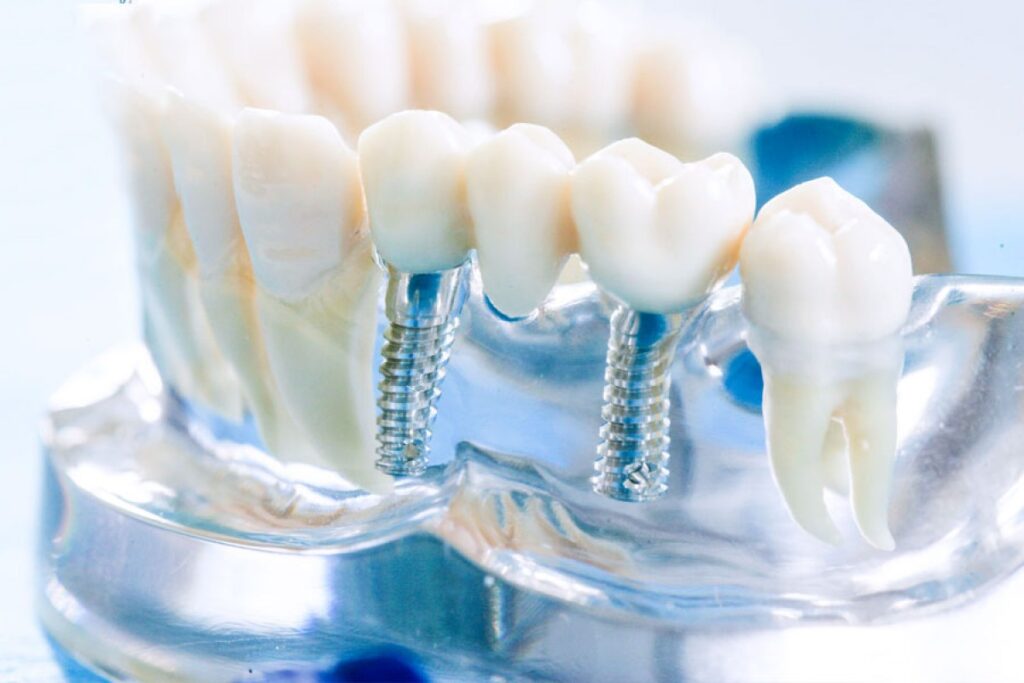
Questions about how long dental implants last come up constantly. Patients want specifics, which makes sense given what they’re investing. Dental implant lifespan varies — bone quality matters, so does how well someone maintains their hygiene. Systemic health plays a role. Behavioral factors do too.
The research shows properly cared-for implants work well for years. My own patient files include plenty of cases past the 20-year mark, still functioning without problems. Published studies give us solid numbers on what to expect across different timeframes.
Average Lifespan of Dental Implants
The data on dental implant lifespan is very clear at this point. One multicenter study followed 10,871 implants for 22 years — survival was 98.9% at three years, dropping to 94.0% by year 15 (1). That’s strong performance compared to other permanent restorations. Looking further out, we see 90-95% still working at 10 years, then 75-80% at the 20-year point (2, 3).
Here’s what patients need to understand about the lifespan of dental implants: you’re dealing with two separate components. The titanium post sits in the jawbone and typically lasts 25-30 years, sometimes indefinitely (4). That’s the permanent tooth implants lifespan in real terms. The crown on top? Different story. Implant crown lifespan runs 10-15 years before replacement becomes necessary due to wear, material breakdown, aesthetic changes (5, 6).
This matters clinically. The post rarely fails once osseointegration happens. What we’re managing long-term is mostly soft tissue health and the prosthetic component, not the implant body itself.
Factors That Affect Implant Longevity
Several risk factors show up repeatedly in failure rate studies. These determine dental implant durability on an individual basis.
Tobacco use is the big one. Meta-analyses show smokers have 140% higher failure risk versus non-smokers (7). The mechanism is straightforward, nicotine constricts blood vessels, limits tissue perfusion, slows healing, increases infection risk. Some studies document failure rates in smokers hitting 2-3 times what we see in non-smokers (8). There’s a dose relationship too. Twenty cigarettes daily or more? Outcomes get significantly worse (9).
Diabetes is more complicated. Some research shows clear links between poor glucose control and complications. Other studies don’t find statistically significant differences (10). What’s established: diabetes affects healing, immune response, and osseointegration when glucose levels aren’t managed. Well-controlled diabetics generally do fine. Uncontrolled cases face higher infection rates and integration problems. Understanding the implant healing process is critical for patients with systemic conditions, as proper osseointegration during the initial months determines long-term stability.
Bone quality and density heavily influence both initial stability and long-term success. Dense bone, Type I or II in the Lekholm-Zarb classification, shows survival around 97.6%. Soft trabecular bone, Types III or IV, drops to roughly 88.8% (11). Osteoporosis may affect quality, though the evidence on implant failure isn’t entirely consistent (10). What you need is adequate volume, both vertical and horizontal, for proper dental implant durability.
Bruxism creates forces way beyond normal chewing loads. Over time this causes loosening, prosthetic damage, bone resorption around the implant (12). Night guards aren’t optional for grinders — they’re mandatory.
Location affects outcomes. Posterior implants take more force, fail slightly more often than anterior ones (13). The upper jaw shows more late failures than lower jaw (14).
Periodontal history raises peri-implantitis risk. Previous periodontitis means higher odds of inflammatory complications with implants (15). The pathogenic bacteria stick around even after extractions.
Implant Crown vs Implant Post Lifespan
The two parts have completely different durability profiles, which is critical when discussing how long do implants last overall.
The fixture, that threaded titanium or zirconia structure, integrates permanently with bone through osseointegration. Titanium makes up 93% of U.S. implants because of its biocompatibility and mechanical strength (16). Proper placement gets you 25-30 years minimum, often much longer (4).
Implant crown lifespan is shorter. Constant functional loading, chemical exposure from food and drink, material degradation, all take their toll. Data shows 50-80% of crowns need replacement within 15-20 years (5). Average runs 10-15 years. Best cases with excellent implant maintenance hit 20+ years (6, 17).
Material choice matters here. Porcelain-fused-to-metal can reach 20 years under good conditions. All-ceramic looks better but averages 15 years with higher fracture risk (17). Replacing the crown is simple though, no surgery required, the original fixture stays put.
How to Make Implants Last Longer
Long-term success requires systematic implant maintenance, both at home and professionally.
Home care is foundational. Brush twice daily with soft bristles at a 45-degree angle to the gumline, this disrupts plaque mechanically. Use low-abrasion toothpaste. Whitening formulas with silica or calcium carbonate will scratch the crown (18). Floss daily with implant-specific floss or interdental brushes, focusing on the abutment area where plaque builds up.
Water flossers work particularly well for implant maintenance. Studies show up to double the improvement in gingival health versus string floss when using the right tips (19). Antimicrobial rinses help too, stick with alcohol-free versions to avoid tissue irritation.
Professional care provides monitoring and early intervention. Most patients need cleanings every six months. Higher-risk cases, prior periodontal disease, smokers, diabetics, should come in every 3-4 months (20). These appointments use specialized titanium instruments for cleaning, including probing around the implant, radiographs to check bone levels, occlusal checks, and prosthetic stability verification.
At NewStar Dental, we take periapical films at each recall to measure crestal bone height and catch inflammation early. Probing detects tissue changes before symptoms show up. Catching problems early prevents surgical intervention later. Our comprehensive dental implants treatment protocols include pre-operative assessment, precision placement, and lifelong maintenance planning to maximize implant longevity.
Night guards are essential for bruxers. Custom-fitted guards from rigid acrylic, not over-the-counter versions that don’t fit right (12). We make them 3mm thick for severe cases. They distribute forces evenly and stop implant micromotion.
Quitting smoking dramatically improves results. Stop one week before surgery, stay off cigarettes for two months minimum afterward (9). Permanent cessation works best. I’ve watched too many implants fail in continuing smokers to sugarcoat this.
Managing diabetes, osteoporosis, and other systemic conditions through medical coordination supports implant success. These aren’t just dental problems, they’re whole-body issues.
Signs an Implant May Need Replacement
Monitoring dental implant lifespan clinically means recognizing deterioration before it becomes irreversible.
Soft tissue changes usually show up first. Redness, swelling, bleeding when brushing, that’s inflammation (21). Gum recession exposing more of the implant or abutment means attachment is being lost. This develops gradually, not overnight.
Infection signs include pus at the implant site, bad breath that doesn’t improve with cleaning, bad taste (21, 22). Peri-implantitis causes most late failures and often starts without obvious symptoms, which is why professional monitoring matters so much.
Mobility is serious. Implants should be completely solid on exams. Any movement, wobbling when chewing, or position shift needs immediate evaluation (23). By the time you can feel it move, substantial bone loss has usually occurred.
Pain is uncommon. When it shows up, it usually means acute infection (22). Persistent discomfort, pain when chewing, pressure sensitivity — all require investigation even though they’re rare.
Prosthetic damage, cracks, chips, significant discoloration, means the crown needs replacement (17). Compromised restorations can let bacteria in at the abutment connection, speeding up tissue breakdown.
Radiographic bone loss without symptoms gets detected routinely during exams (15). Finding it at that stage allows conservative treatment before you’ve lost critical supporting bone.
Are Implants a Lifetime Solution?
Being realistic about how long dental implants last means understanding what “lifetime” actually means. The lifespan of dental implants, meaning the fixture specifically, can be permanent given proper conditions.
Fixtures can last a lifetime with good care. The evidence supports this (1, 4). But the complete restoration needs periodic component replacement. Crowns get replaced every 10-15 years typically (5, 6). Dental implant durability is maintenance-dependent, not absolute.
Patient compliance determines success. Good hygiene, regular professional implant maintenance, no smoking, managed systemic conditions, these collectively drive outcomes (20). Poor compliance tanks results regardless of surgical quality.
Economically, implants win despite higher upfront costs. Bridges need replacement every 10-15 years, dentures last 5-8 years, implants function 25-30 years, better long-term value. For a detailed comparison of treatment options, see our guide on implants vs bridges, which breaks down the functional and financial differences over time.
Implants are long-term restorations requiring maintenance. They’re closer to natural teeth than alternatives but more susceptible to bacterial attack because the periodontal attachment is structurally different (24).
NewStar Dental in Fort Lauderdale offers advanced dental implants treatment with comprehensive maintenance programs designed to maximize implant longevity. Schedule your consultation to learn how we can help you achieve long-lasting results.
FAQ
Do implants last forever?
The titanium fixture can last indefinitely with proper care. The crown has a shorter implant crown lifespan — 10-15 years before wear necessitates replacement (5, 6). Best cases get 15-25 years from crowns. Understanding how long do dental implants last requires knowing that data shows 90-95% function at 10 years, dropping to 75-80% at 20 years (2, 3). “Lifetime” depends on bone quality, hygiene compliance, systemic health, and behaviors like smoking. Fixtures are engineered for permanence. Complete restorations need periodic attention.
Can implants fail years later?
Late failures represent about 16% of total losses (14). Peri-implantitis, inflammatory disease destroying bone progressively, is the main cause (15). Other factors: uncontrolled diabetes, tobacco use, age-related bone density loss, excessive grinding forces, inadequate implant maintenance allowing bacterial colonization, mechanical problems (7, 12, 23). Late failures can happen 5, 10, even 20+ years after placement. Regular professional exams catch problems early when you can still save the implant.
How often are crowns replaced?
Implant crown lifespan typically runs 10-15 years with significant individual variation (5, 6). Optimal cases reach 15-25 years. Posterior restorations wear faster from higher chewing forces (13). Material matters: porcelain-fused-to-metal can hit 20 years, all-ceramic averages 15 years (17). Published data shows 50-80% of crowns need replacement within 15-20 years (5). Replacing crowns is routine, no surgery involved, the original fixture stays in place during fabrication and placement.
References
- Froum SJ, et al. Long term clinical performance of 10,871 dental implants with up to 22 years of follow-up. Clinical Implant Dentistry and Related Research. 2021. PMC8359846.
- Dental Implant Statistics 2025-2024. Dr. John Patterson Dental Practice. August 2025.
- Dental Implant Statistics 2025-2024 & 2023 2024. Impressions Dental. July 2025.
- Valley Dental Care. How Long Do Dental Implants Last? September 2025.
- Healthline. How Long Do Dental Implants Last? July 2021.
- River Falls Family Dental. How Long Do Implant Crowns Last? January 2020.
- Smoking and Dental Implants: A Systematic Review and Meta-Analysis. PMC8780868. December 2021.
- The Effects of Smoking on Dental Implant Failure: A Current Literature Update. MDPI. September 2024.
- Evaluation of marginal bone loss around dental implants in cigarette smokers and nonsmokers. PMC7114060.
- Smoking, Radiotherapy, Diabetes and Osteoporosis as Risk Factors for Dental Implant Failure: A Meta-Analysis. PMC3733795.
- Dr. Tim Silegy DDS. How Long Do Dental Implants Last? March 2025.
- Dental implants in patients with bruxing habits. PubMed 16457676.
- Thomas Trinkner DDS. How Long Do Dental Implants Actually Last? September 2024.
- Risk Factors related to Late Failure of Dental Implant. PMC7312800.
- Management of peri-implantitis. PMC3612185.
- Dental Implant Statistics. Clinical sources, 2024-2025.
- Overhill Dental. How Often Do Implant Crowns Need To Be Replaced?
- Aspen Dental. How to Clean Dental Implants.
- Waterpik EDU. Dental Implant Care & Maintenance. 2014.
- ASIRD. Dental Implant Maintenance.
- J. Pan Prosthodontics. 5 Early Signs of Peri-Implantitis. January 2025.
- Peri-implantitis Update: Risk Indicators, Diagnosis, and Treatment. PMC7536094.
- Why Dental Implants Fail After 10+ Years. Elite Dental Group. December 2025.
- Faculty Dental Journal. Why implants fail?


