
If you have a crown, you do not need a special mouthwash just because it is a crown. What matters is your oral-health needs. A fluoride rinse may help with cavity prevention, an antimicrobial rinse may help with certain gum concerns, and an alcohol-free option may feel gentler if your mouth is dry. None replaces brushing and cleaning between your teeth.
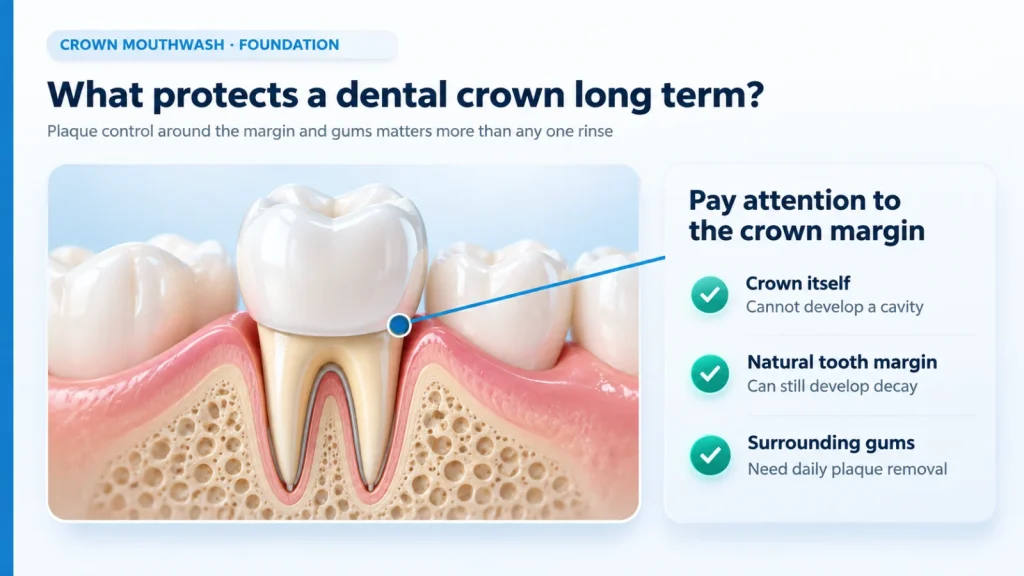
The crown itself cannot decay, but the natural tooth along its edge still can. Plaque can also irritate the gums around it. Brush twice a day with fluoride toothpaste and clean between your teeth daily. Think of mouthwash as an extra, not the main way you care for a crown.
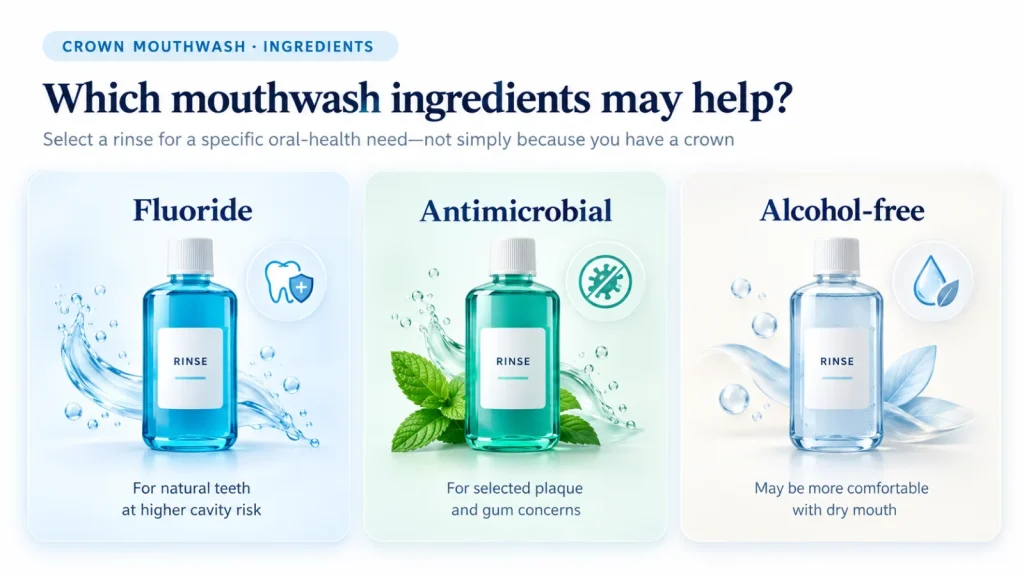
A fluoride mouthrinse can be useful when a patient is at higher risk for tooth decay, including decay around crown margins. It should be used as an addition to fluoride toothpaste, not as a replacement for brushing.
Some therapeutic rinses contain ingredients such as cetylpyridinium chloride or essential oils that can help reduce plaque or gingivitis when used together with daily brushing and interdental cleaning.
Chlorhexidine is a prescription antimicrobial rinse. It is not a routine “best mouthwash” for every crown patient and should generally be used only when a dentist recommends it for a specific reason. It can cause staining, taste changes and increased calculus in some patients.
Patients with dry mouth, burning or irritation may prefer an alcohol-free rinse. The important point is to choose a product based on the problem you are trying to address rather than the fact that you have a crown.
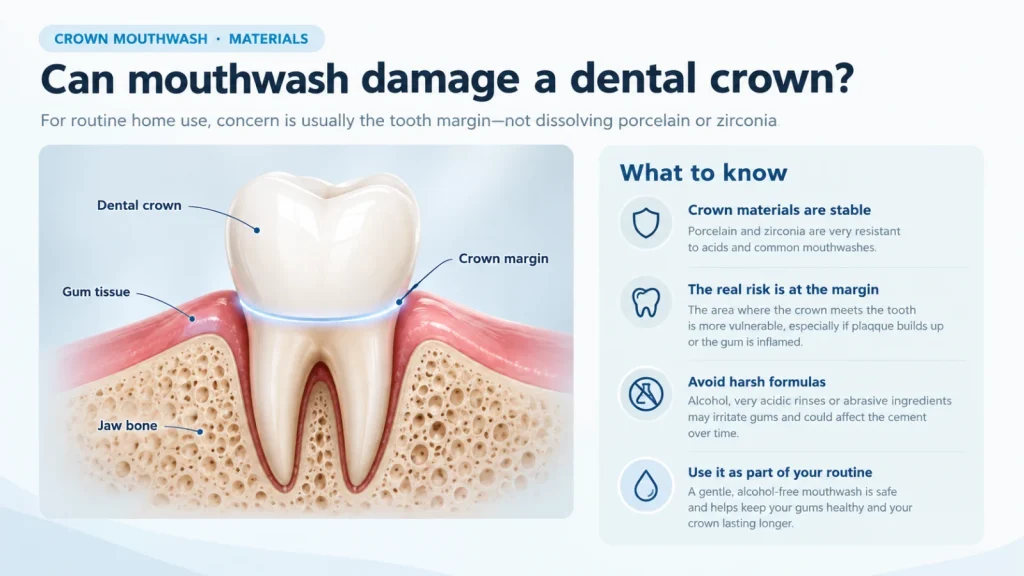
Ordinary mouthwash is not usually a threat to a porcelain or zirconia crown. Pay closer attention to the gumline and the tooth underneath. If your crown feels loose or painful, or you notice a persistent odor or bad taste, a stronger rinse is unlikely to fix the underlying issue.
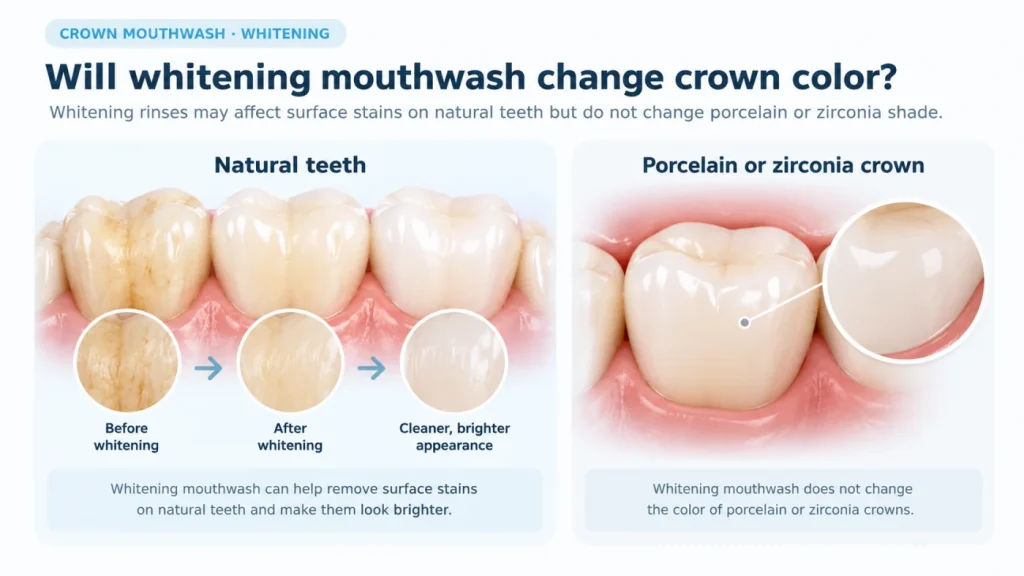
Whitening mouthrinses may help remove some surface staining from natural teeth, but they do not change the color of an existing porcelain or zirconia crown. If the natural teeth become lighter while a crown stays the same shade, the color difference may become more noticeable.
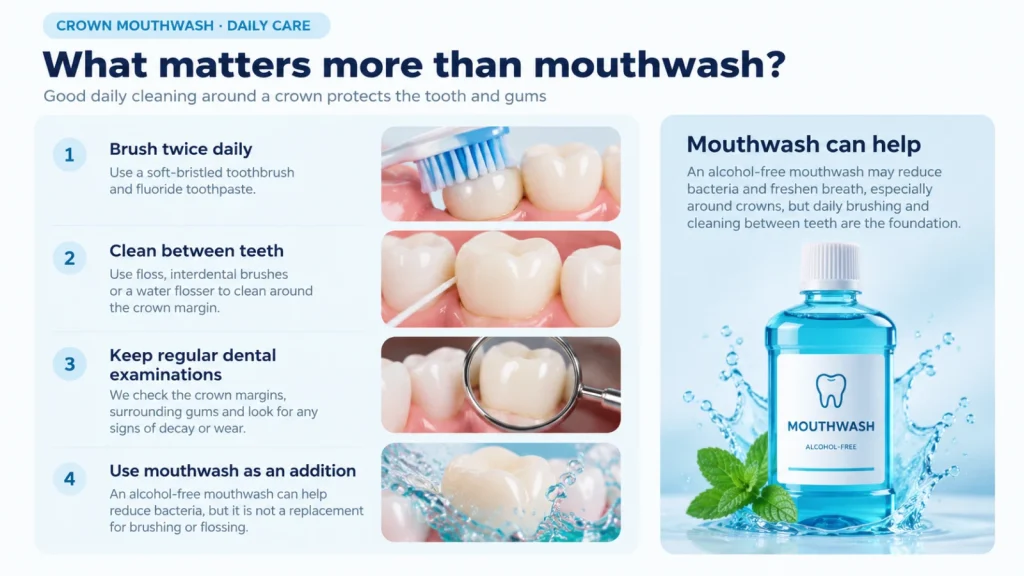
The “best” mouthwash for a crown depends on the patient. Fluoride can support cavity prevention, antimicrobial rinses can be useful for selected plaque/gingivitis concerns, and alcohol-free options may be more comfortable for dry mouth. Daily brushing and interdental cleaning matter more than the brand of mouthwash.
Is an existing crown uncomfortable or difficult to clean? Call 954-824-1824 or book a crown evaluation at NewStar Dental in Fort Lauderdale.