
Root canal treatment can help you keep a natural tooth for many years. The American Association of Endodontists reports success rates above 90%, but that figure is not a guarantee for an individual tooth. The tooth’s condition, remaining structure, permanent restoration and future care all affect the long-term result.
Root canals have a strong track record, but the outlook depends on the individual tooth. Cracks, gum and bone support, the shape of the canals and the quality of the final restoration can all make a difference.
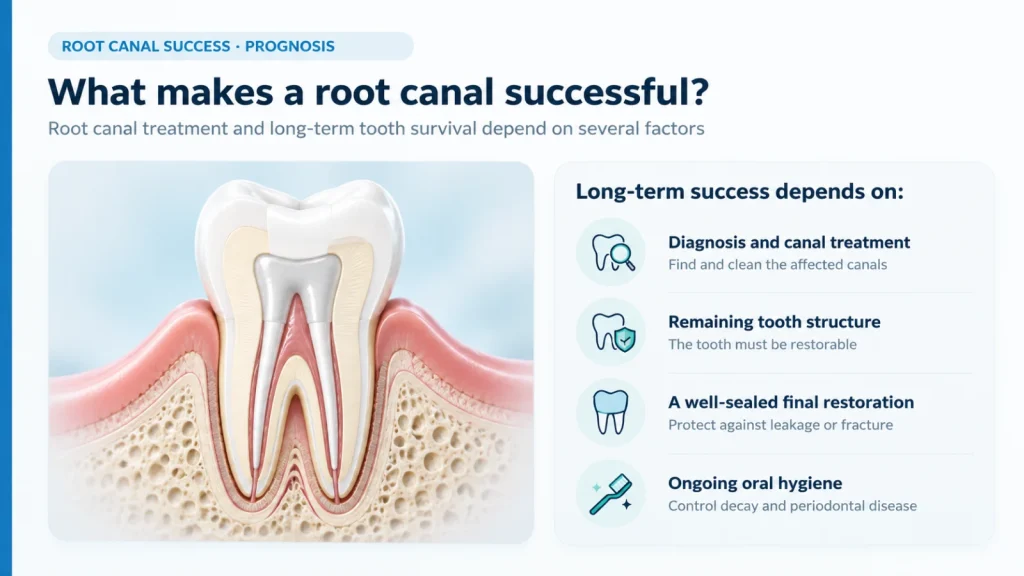
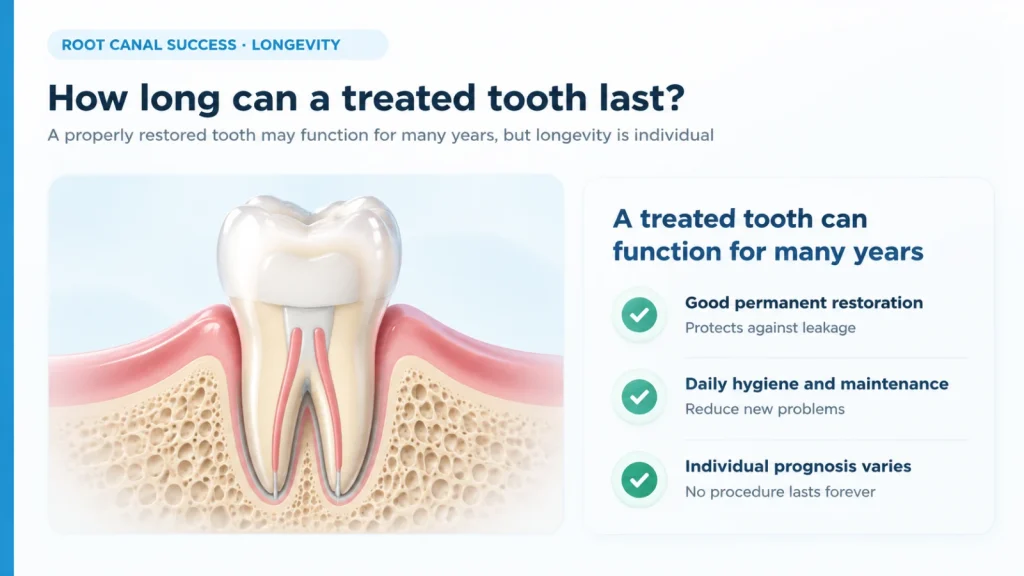
With proper treatment, a good permanent restoration and ongoing oral hygiene, a root-canal-treated tooth can function for many years and may last a lifetime. A successful root canal still requires the tooth to be protected from new decay, leakage and fracture.
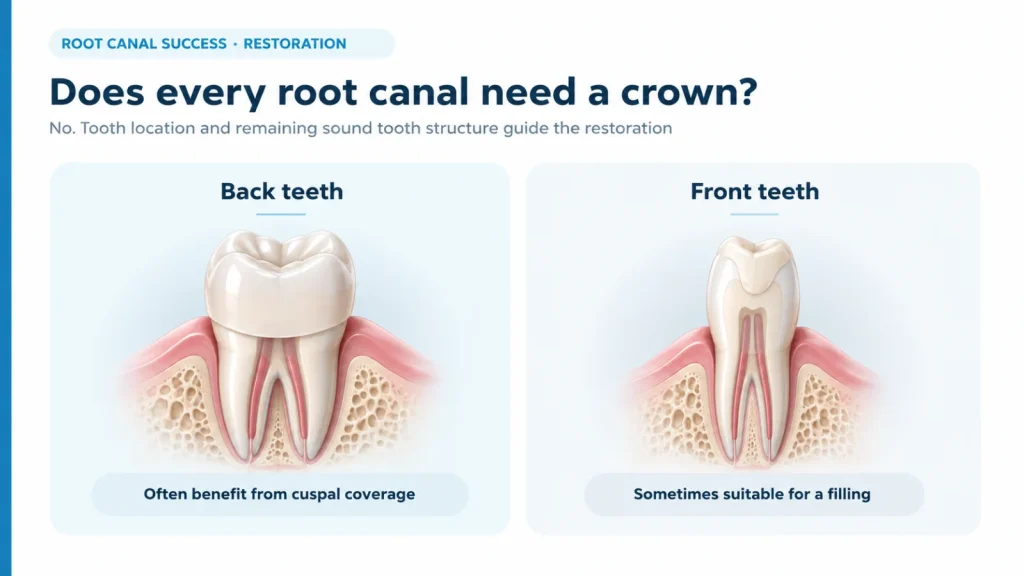
No. The decision depends on the location of the tooth and how much healthy structure remains. Back teeth such as molars and premolars often need a crown because they absorb substantial chewing force. A front tooth with adequate remaining structure may sometimes be restored without a crown. If a large portion of any tooth has been lost to decay, fracture or previous restorations, cuspal coverage with a crown may be needed to protect the remaining tooth.
Clinical principle: The success of a root canal and the survival of the tooth are related but not identical. The canals can be treated successfully, yet the tooth can still be lost later if it fractures or if the permanent restoration leaks or develops new decay.
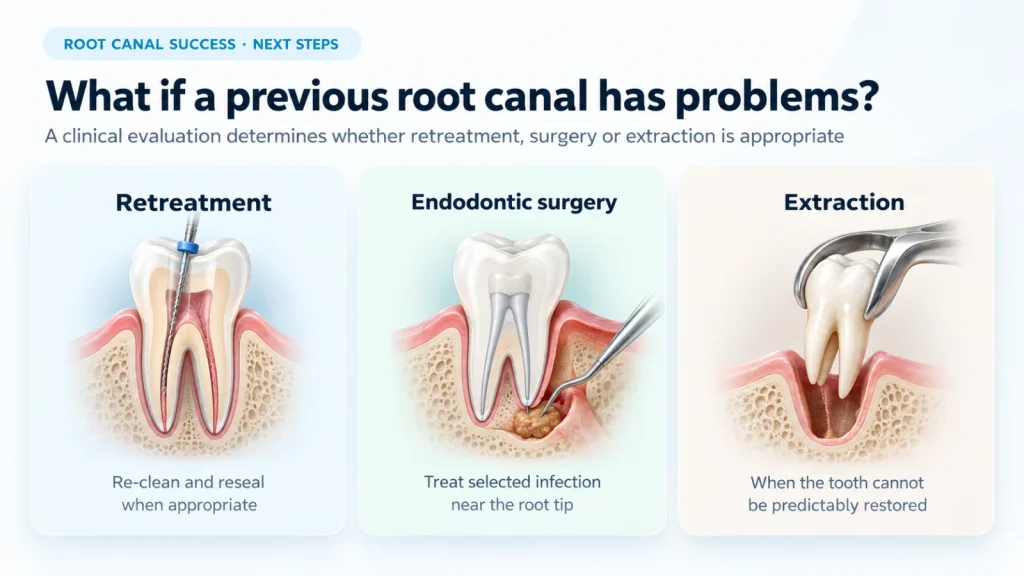
Yes. A previously treated tooth can develop a new problem months or years later. Causes can include untreated or difficult canal anatomy, new decay, a loose or broken restoration, contamination from leakage or a new fracture. Some teeth can be saved with root canal retreatment or endodontic surgery, while others may no longer be restorable.
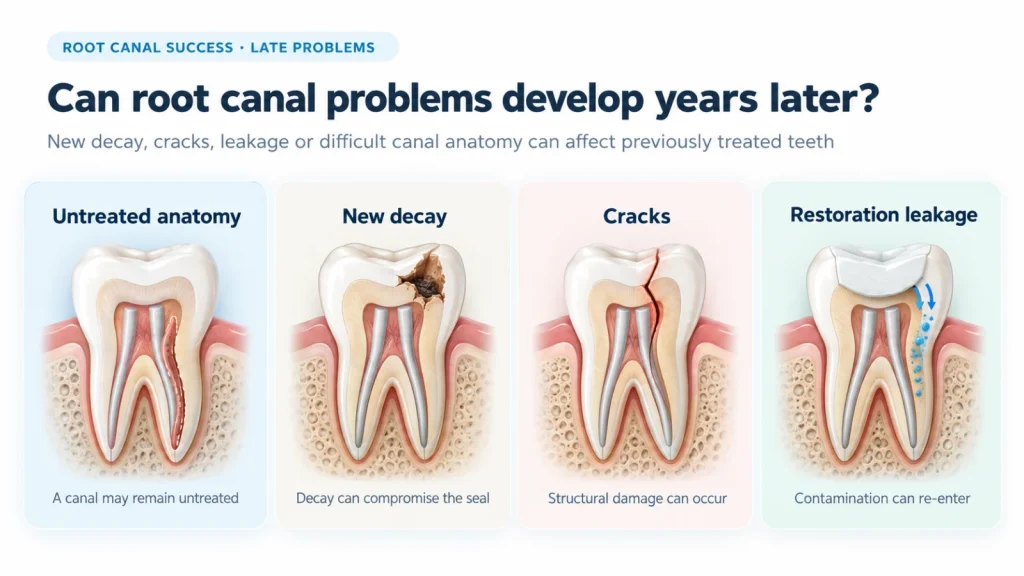
To see whether a tooth can still be saved, a dentist needs to look at more than the root canal itself. Cracks, how much healthy tooth remains and support from the gums and bone all matter. Sometimes the canals can be treated, but there is not enough tooth left for a reliable restoration.
When a tooth is predictably restorable, saving the natural tooth is often worth considering. Extraction may be appropriate when the tooth cannot be restored, has an unfavorable fracture, has severe periodontal support loss or has another condition that makes long-term retention unrealistic. A second opinion can be useful before removing a tooth when the prognosis is uncertain.
Have pain in a tooth that has had a root canal, or are you deciding between root canal treatment and extraction? Call NewStar Dental at 954-824-1824 to arrange an evaluation.