
Clear aligners and traditional braces can both straighten teeth, but they have different strengths. Aligners are removable and less noticeable, although you must wear them consistently. Braces stay attached to the teeth and may be preferable for certain complex movements. NewStar Dental offers clear aligners; we do not provide traditional braces.
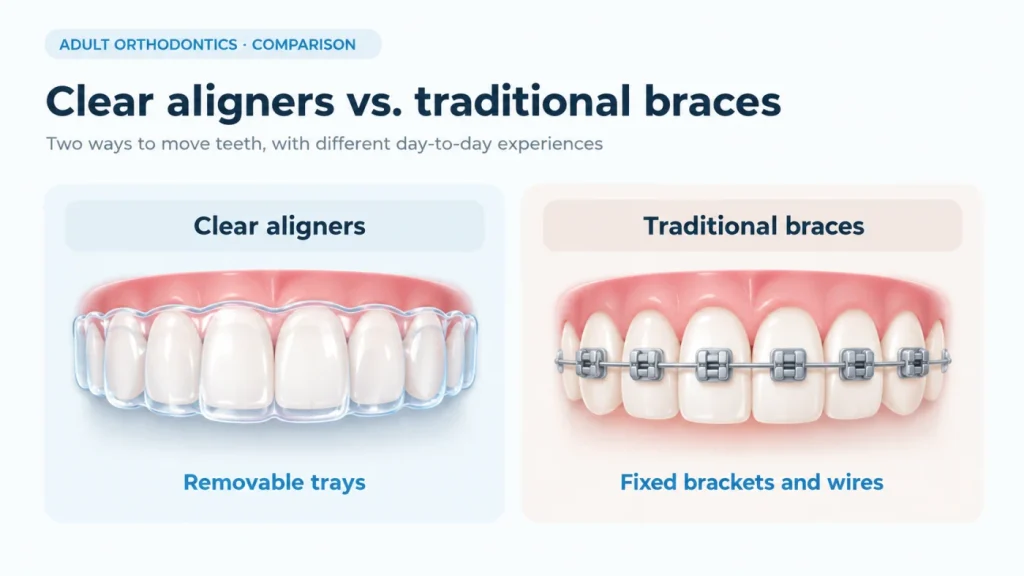
| Question | Clear aligners | Traditional braces |
|---|---|---|
| Visibility | Very discreet | Visible |
| Removable | Yes | No |
| Eating restrictions | Fewer because trays are removed for meals | More food restrictions |
| Daily compliance | High — trays must be worn as directed | Lower patient responsibility for wear because appliance is fixed |
| Hygiene access | Easier access for brushing/flossing | More technique needed around brackets/wires |
| Complex tooth movement | Case dependent | Can be advantageous for many complex movements |
| Treatment time | Case dependent | Case dependent |
Clear aligners work well for many adults, but not for every bite. Your gum health, the movements required and your ability to wear the trays as instructed all matter. An exam and orthodontic records help determine whether aligners are the right choice.
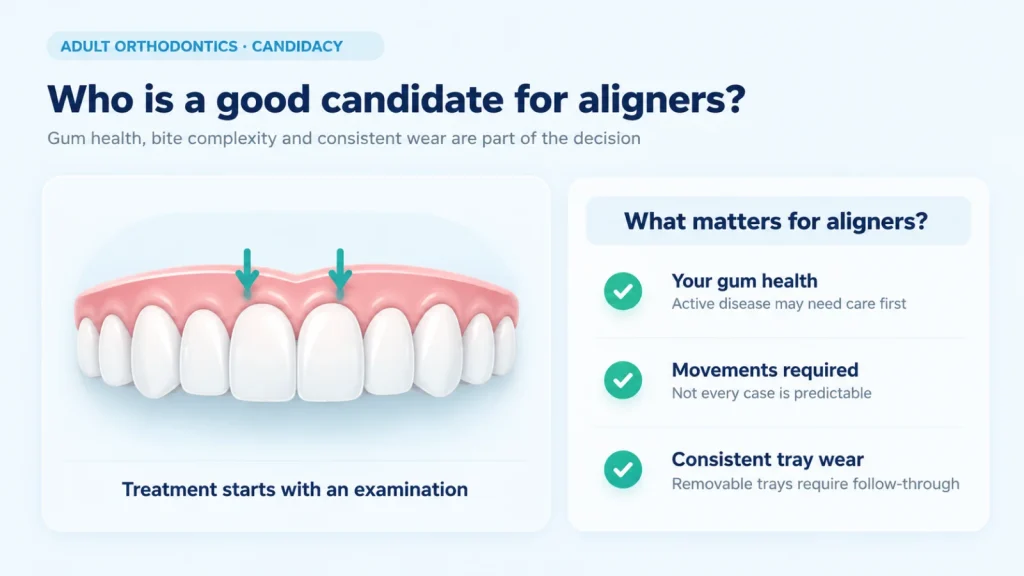
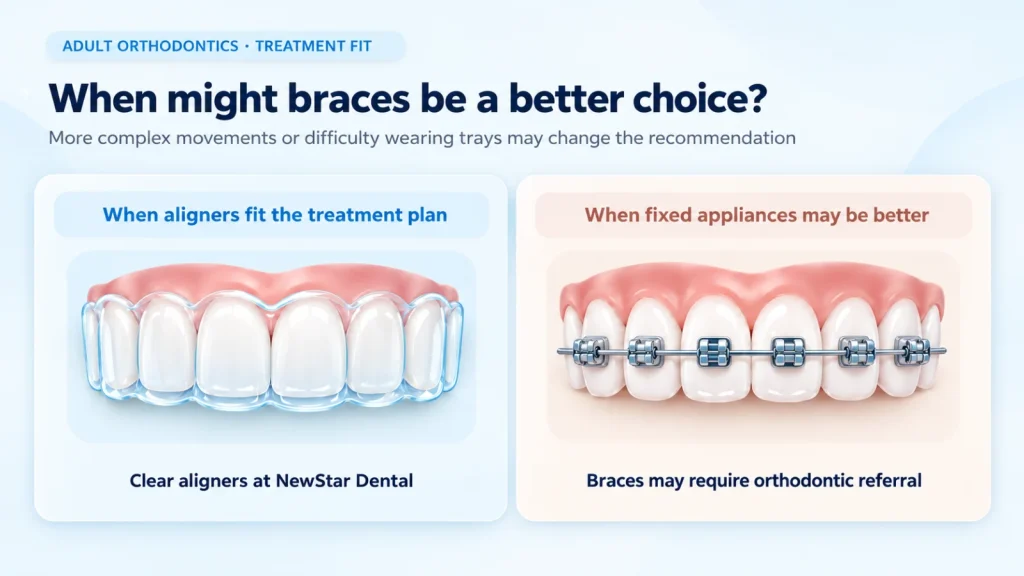
I would be cautious about aligners if the needed movements are unlikely to be predictable, the gums are not healthy or wearing the trays consistently would be difficult. In those cases, traditional orthodontic treatment or another approach may be more suitable.
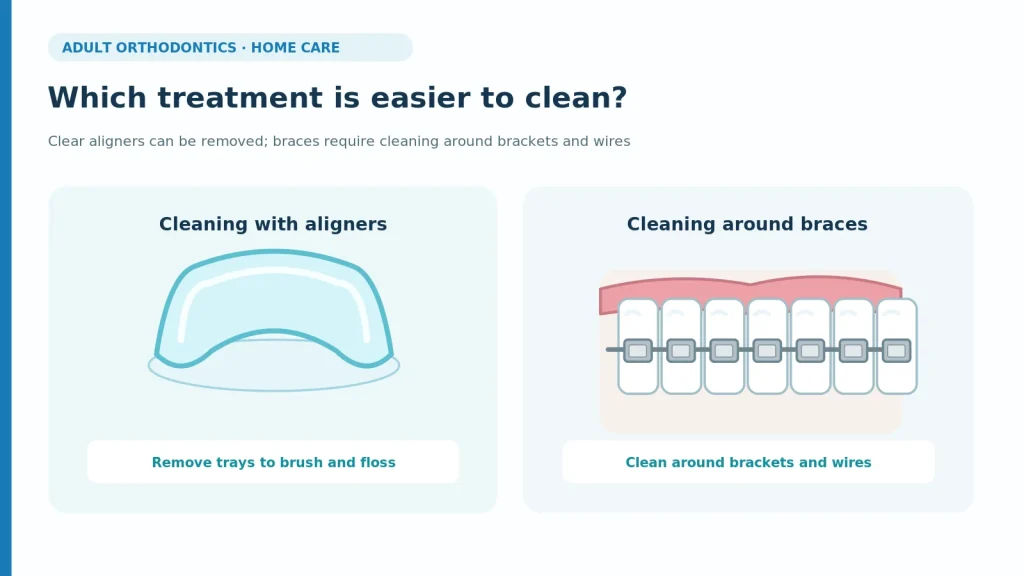
Clear aligners are removable, which makes normal brushing and flossing easier. Braces require more technique around brackets and wires. With either option, oral hygiene is critical because plaque accumulation can contribute to gingivitis, cavities and white-spot lesions.
Both treatments create pressure as teeth move. Aligners avoid brackets and wires but can still cause temporary soreness or edge irritation. Braces can cause temporary soreness and soft-tissue irritation, especially after adjustments. Comfort varies by patient and stage of treatment.
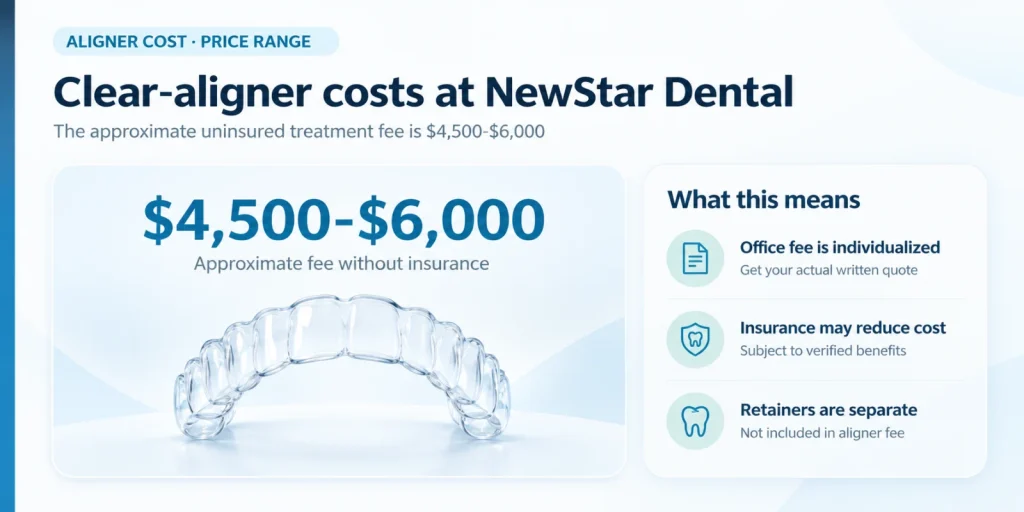
At NewStar Dental, clear-aligner treatment is generally about $5,000–$8,000 without insurance, with retainers priced separately. Orthodontic coverage may lower your out-of-pocket cost, depending on your plan.
The better treatment is the one that can predictably achieve the required tooth movement while fitting the patient’s health, lifestyle and ability to follow the plan. We offer clear aligners; if your case would be better served by traditional braces, you should be told that rather than being pushed into aligners simply because they are more discreet.