
Medically reviewed by Denys Severchenko, DMD (Florida dental license DN 24918).
If one of your teeth suddenly feels sharp against your tongue, it may have chipped. Other possible causes include a worn filling, grinding, enamel erosion or simply the natural shape of the tooth. A new sharp edge—especially one that comes with pain or sensitivity—is worth having checked.
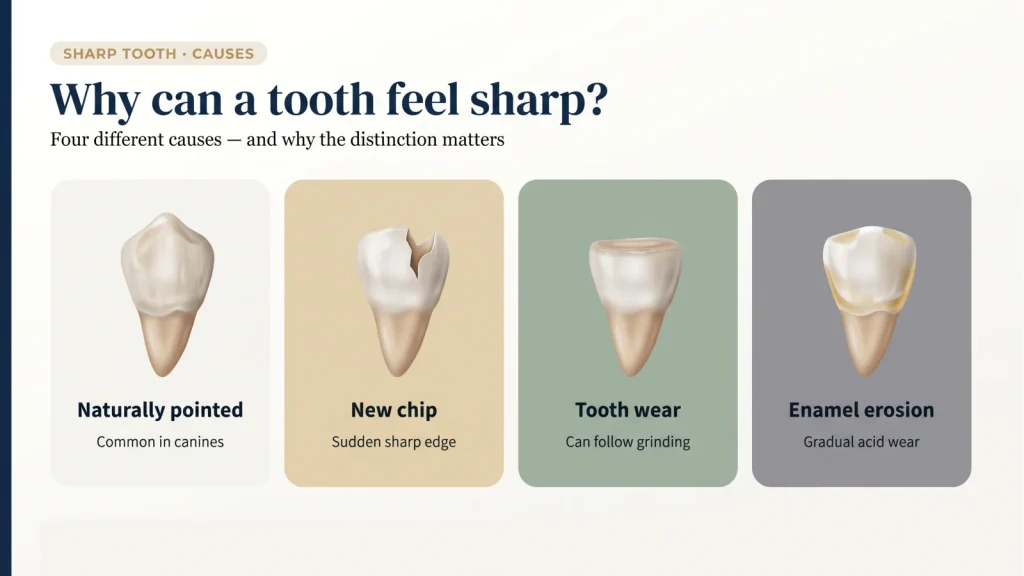
Some teeth are naturally pointed, especially the canines. Their shape helps us tear food, and the points can be more noticeable in some people than others. If your tooth has always looked that way and feels fine, you may not need treatment.
Even a tiny chip can leave an edge that catches your tongue or cheek. It might happen after biting something hard, an injury, grinding or gradual wear. If you remember the tooth feeling smooth before, have the new edge examined.
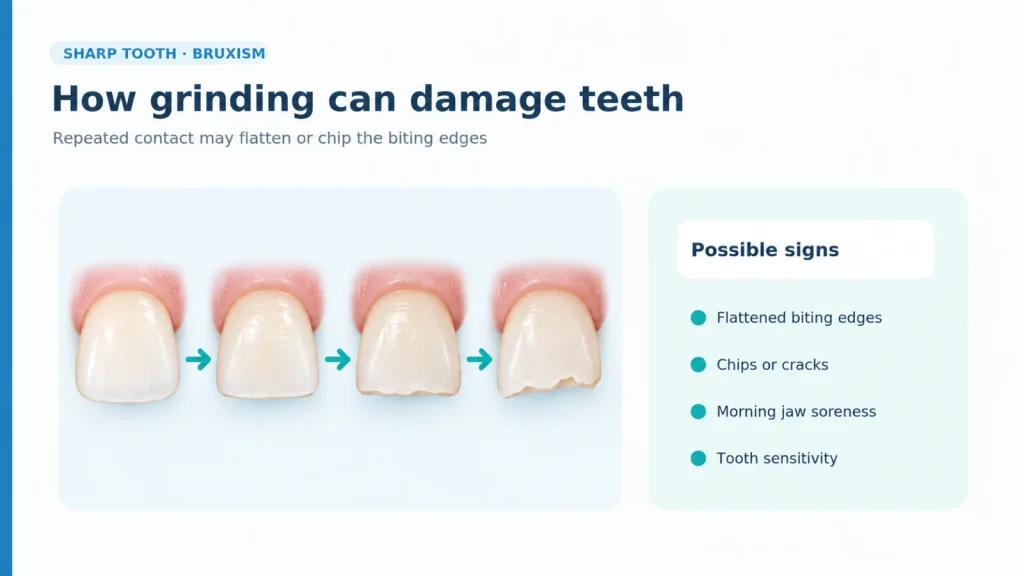
Grinding or clenching — also called bruxism — can gradually wear the biting surfaces of the teeth and may contribute to small chips or fractures. Other signs can include flattened or worn teeth, jaw soreness, morning headaches, tooth sensitivity or damage to restorations. If grinding is contributing to tooth damage, a dentist may recommend a custom night guard after evaluating the bite and the condition of the teeth.
Frequent exposure to acid can slowly wear away enamel. Acidic foods and drinks are possible sources, as are reflux and repeated vomiting. As enamel wears, teeth may become sensitive or feel uneven. Enamel does not grow back, so finding and addressing the cause matters.
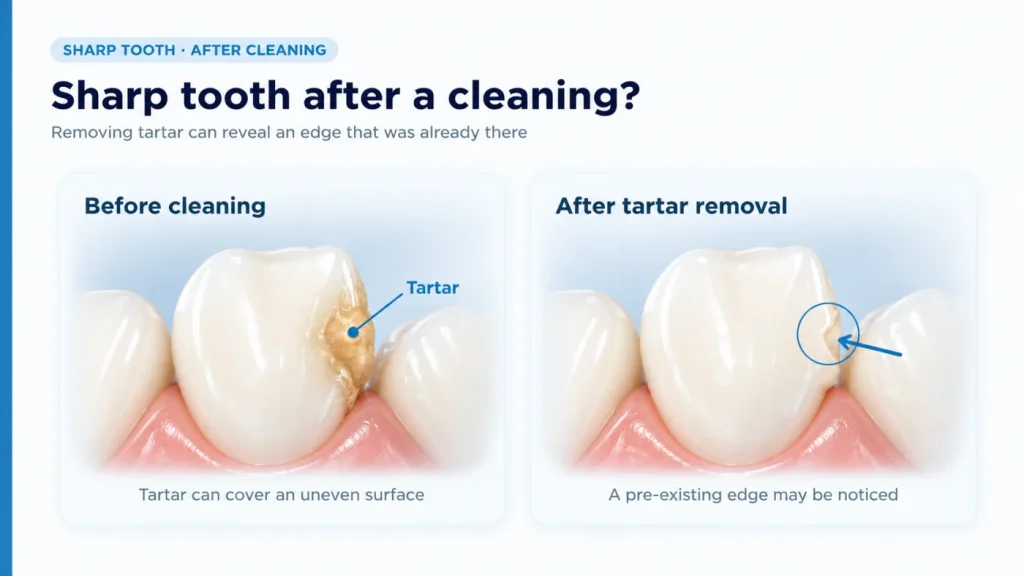
A cleaning normally does not create a sharp edge. Sometimes tartar was covering a small chip, worn area or rough filling, and you notice it only after the buildup is removed. If the sensation continues, ask a dentist to check it rather than trying to smooth it yourself.
Illustration: A cleaning typically does not create the sharp edge; tartar removal may make an existing irregularity easier to feel.
Clinical note: A tooth that has always been naturally pointed is different from a tooth that suddenly becomes sharp. A sudden change is more likely to deserve an examination for a chip, fracture, worn restoration or other damage.
If there is only a small enamel irregularity and the tooth is otherwise healthy, a dentist may be able to gently smooth or reshape the edge. Only a small amount of enamel should be removed, so the tooth needs to be evaluated first. Do not file a tooth yourself at home; removing too much enamel can cause permanent damage or sensitivity.
Dental bonding can be useful when a small portion of a tooth has chipped or when the tooth needs material added rather than removed. Tooth-colored composite resin is shaped and polished to restore a smoother, more natural contour.
If a tooth has lost a significant amount of structure, has a large fracture or is too weakened for simple bonding, a dental crown may be recommended. A crown covers and protects the remaining tooth while restoring its shape and function.
Veneers may be considered when the concern is mainly the shape or appearance of healthy front teeth. Because veneers are a larger treatment decision than simply smoothing a minor edge, a dentist should first determine whether a more conservative option is appropriate.
If repeated grinding or clenching is damaging the teeth, repairing the sharp edge without addressing the grinding may allow the problem to happen again. A custom night guard can help protect teeth from additional wear or chipping when it is appropriate.
Sleep bruxism and obstructive sleep apnea can occur in the same person, but one does not automatically mean the other is the cause. If you grind your teeth and also have loud snoring, witnessed pauses in breathing, significant daytime sleepiness or other symptoms concerning for sleep apnea, discuss those symptoms with an appropriate medical professional.
There is no single price for fixing a sharp tooth. A small area that only needs smoothing is very different from a chipped tooth that needs bonding or a fractured tooth that needs a crown. An exam will show which treatment, if any, is appropriate.
You cannot prevent naturally pointed teeth, but you can reduce the risk of damage and excessive wear. Avoid chewing ice or hard non-food objects, use appropriate protection during sports, address persistent grinding or clenching, limit frequent acidic drinks and maintain routine dental examinations. After significant acid exposure, rinsing with water is generally better than brushing immediately.
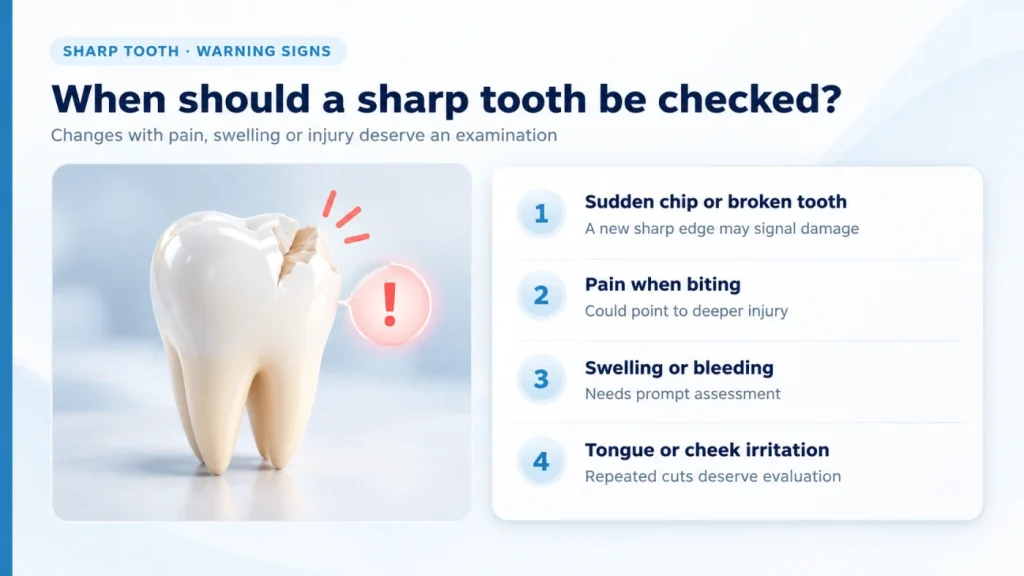
A sharp tooth should be evaluated promptly if the edge appeared suddenly, if part of the tooth broke off, or if you also have pain, temperature sensitivity, pain when biting, swelling, bleeding or repeated irritation of your tongue or cheek. A dentist can determine whether you are feeling normal tooth anatomy or whether there is a chip, fracture, worn restoration, erosion or another problem that requires treatment.
Does your tooth feel newly chipped, rough or sharp? Call NewStar Dental in Fort Lauderdale at 954-824-1824 or book an exam online. We can check the cause and discuss options to make it comfortable again.